Hidden water damage can develop behind walls, beneath flooring, inside ceilings, and around plumbing fixtures long before you notice a puddle. Early warning signs include musty smells, peeling paint, unexplained stains, warped floors, and unusually high water bills. Recognizing these problems early can help you prevent structural deterioration, reduce the risk of mold growth, and avoid more extensive repairs.
For homeowners and businesses in South Florida, moisture problems deserve prompt attention because even a small leak can continue damaging building materials when left untreated. Water Damage Restoration Miami FL services can help identify the source of moisture, assess affected areas, and determine what needs to be dried, repaired, or replaced.
Rapid Response Restoration helps property owners address water damage concerns with professional restoration services. Here is how to recognize hidden water damage, understand what causes it, and decide what to do next.
1. What Are the Most Common Signs of Hidden Water Damage?
Hidden water damage does not always look like a major leak. Sometimes, the first clue is a small change in the appearance, smell, or condition of your property.
Musty or Damp Odours
A persistent musty smell may indicate moisture trapped inside walls, beneath carpets, under cabinets, or in other poorly ventilated spaces. The odour can become more noticeable when you enter a room after it has been closed for several hours.
Although mustiness does not automatically mean mold is present, it is a reason to investigate the possibility of hidden moisture.
Water Stains on Ceilings and Walls
Yellow, brown, or dark patches on ceilings and walls can indicate a roof leak, plumbing problem, or water intrusion from another area. A stain that grows, changes colour, or reappears after being painted over may point to an ongoing moisture issue.
Pay particular attention to ceilings beneath bathrooms, around air-conditioning equipment, and near roof penetrations.
Peeling Paint or Bubbling Wallpaper
When moisture collects behind paint or wallpaper, the surface may begin to bubble, blister, crack, or separate from the wall. These changes can occur even when the wall does not feel noticeably wet.
Painting over the damaged area without finding and correcting the moisture source will not resolve the underlying problem.
Warped Flooring or Soft Spots
Wood flooring, laminate, carpet, and some subfloor materials can change shape when exposed to moisture. You might notice boards lifting, edges curling, tiles becoming loose, or sections of flooring feeling soft underfoot.
These signs should not be ignored, particularly near kitchens, bathrooms, laundry rooms, and water heaters.
2. Why Does Hidden Water Damage Happen in Miami Properties?
South Florida properties can experience water intrusion from several sources. Identifying the cause is essential because drying the affected area without addressing the source may allow the damage to return.
Leaking Pipes and Plumbing Connections
A slow leak inside a wall, beneath a sink, or around a toilet connection may continue for days or weeks before becoming visible. Small plumbing failures can gradually damage drywall, cabinetry, insulation, and flooring.
Check for damp cabinet interiors, discolored surfaces around pipes, and unexplained moisture near plumbing fixtures.
Roof Leaks and Storm-Related Water Intrusion
Heavy rain, wind-driven rain, damaged shingles, and deteriorated roof flashing can allow water to enter a property. Moisture may travel along structural materials before appearing as a stain somewhere else.
After a storm, inspect accessible areas for new ceiling marks, damp walls, and water around windows. Avoid climbing onto a wet or damaged roof.
Air-Conditioning Condensation and Drainage Problems
Air-conditioning systems work hard in Miami’s warm, humid climate. Blocked condensate drains, damaged drain pans, or leaking connections can release water into ceilings, closets, walls, and nearby flooring.
If you notice moisture around an indoor unit or an unusual increase in dampness, have the system checked by a qualified HVAC professional.
Appliance Leaks
Dishwashers, washing machines, refrigerators with water connections, and water heaters can develop leaks that remain concealed behind or beneath the appliance.
Inspect accessible hoses and surrounding floors periodically. If an appliance has a suspected electrical fault or is standing in water, do not touch it until the situation has been made safe.
3. Can Hidden Water Damage Cause Mould?
Yes. Persistent moisture can create conditions that allow mold to grow on susceptible materials such as drywall, wood, carpet, and insulation. Mold may develop in concealed spaces even when the visible surface appears relatively clean.
The risk depends on factors such as how much water entered the property, how long materials remained damp, the temperature, and the materials affected.
Warning Signs That Deserve Attention
-
A musty smell that continues after ordinary cleaning.
-
Dark or irregular spots appearing on walls, ceilings, or around windows.
-
Recurring dampness in the same location.
-
Water-damaged materials that remain wet or feel soft.
-
Visible mold returning after the surface has been cleaned.
Do not simply paint over suspected mold or cover up damp materials. The moisture source needs to be corrected, and affected materials may require appropriate cleaning, drying, or removal.
If you suspect concealed mold, avoid disturbing the area unnecessarily. Professional assessment can help determine the extent of the problem and the appropriate next steps.
Learn more about how professional water damage restoration helps prevent mould growth and why proper drying is an important part of addressing moisture problems.
4. What Should You Do When You Suspect Hidden Water Damage?
Taking sensible steps early can help limit additional damage while keeping you and your property safe.
Step 1: Identify the Possible Source
If it is safe to do so, check accessible plumbing fixtures, appliance connections, ceilings, windows, and air-conditioning drainage areas. If you suspect a plumbing leak, shut off the relevant water supply when you can do so safely.
Do not enter areas with sagging ceilings, unstable flooring, standing water near electrical equipment, or other structural or electrical hazards.
Step 2: Document What You Notice
Take photographs of visible stains, warped flooring, damaged belongings, and other affected areas. Make a note of when you first noticed the problem and whether it changes after rainfall or appliance use.
This information may help restoration professionals and your insurance provider understand the situation.
Step 3: Arrange a Professional Assessment
A restoration professional can inspect the affected area, assess moisture conditions, and help identify which materials may need drying or further investigation. Depending on the situation, specialised moisture meters, thermal imaging equipment, or other inspection methods may help locate concealed moisture.
An assessment can also help establish whether the damage requires water extraction, structural drying, material removal, or additional repairs.
Need help with water damage? Request a water damage assessment from Rapid Response Restoration if you notice unexplained stains, damp flooring, or a persistent musty smell.
Step 4: Begin Appropriate Drying and Restoration
Once the source is controlled and the area is safe, affected materials may need professional drying and moisture monitoring. Simply opening a window or running a household fan may not be enough when water has entered wall cavities, insulation, or subflooring.
Water Damage Restoration Miami services can help coordinate the assessment, water removal, drying, and restoration work needed to address affected areas.
5. When Should You Call an Emergency Restoration Company?
Not every moisture problem requires an emergency response, but some situations should be addressed immediately. Delaying action can allow water to spread into additional building materials and increase the amount of restoration work required.
Situations That May Require Urgent Attention
Contact an emergency restoration company Miami property owners can reach out for assistance when you experience:
-
An active pipe burst or significant plumbing leak.
-
Water entering the property during a storm.
-
Flooding that affects walls, flooring, or multiple rooms.
-
A ceiling that is sagging or showing signs of significant water accumulation.
-
Water near electrical outlets, wiring, or electrical equipment.
-
A sudden, substantial water release from an appliance or water heater.
If there is an immediate electrical, structural, or other safety hazard, keep people away from the affected area and contact the appropriate emergency service or qualified professional first.
Experiencing a Water Damage Emergency?
Need help with water damage? Call now to request a water damage assessment from Rapid Response Restoration.
6. What Does Water Damage Restoration Involve?
The restoration process depends on the source of the water, how far it has spread, and which building materials are affected. A typical project may include several stages.
Inspection and Moisture Assessment
The first step is to understand where the water came from and which areas have been affected. Professionals may inspect visible damage and use appropriate moisture-detection tools to investigate surrounding materials.
Water Extraction and Structural Drying
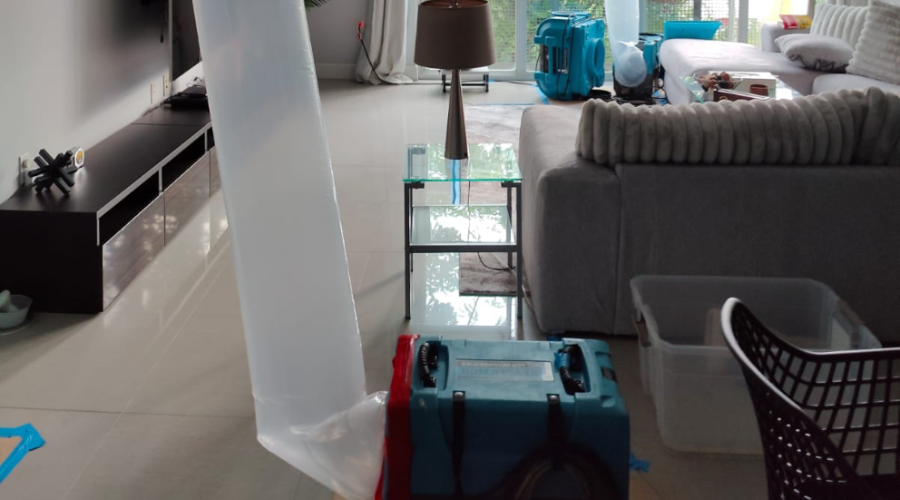
Where standing water is present, extraction may be necessary. Professional drying equipment can then help remove excess moisture from affected areas. Moisture readings and follow-up checks help determine whether materials are drying adequately.
Cleaning and Damage Removal
Depending on the type of water and the condition of the materials, cleaning, sanitising, or removing damaged materials may be necessary. The correct approach depends on the contamination risk and the condition of the property.
For a closer look at what happens during professional restoration, read our guide to how the water damage restoration process works in Miami , from the initial inspection through drying and repairs.
Repairs and Reconstruction
Once the affected areas have been appropriately dried and assessed, damaged drywall, flooring, insulation, or other building components may need repair or replacement.
Water damage repair in Miami FL services may be needed to restore the appearance and function of a property after the moisture problem has been addressed.
Need a Water Damage Repair Quote?
If water has damaged your walls, flooring, ceilings, or other building materials, ask Rapid Response Restoration about assessment and repair options for your property. Get a quote now.
7. How Can You Reduce the Risk of Hidden Water Damage?
Although no property is completely protected from leaks or storms, routine maintenance can help you identify developing problems before they become more extensive.
Simple Prevention Tips for Homeowners and Businesses
-
Inspect visible plumbing connections, appliance hoses, and under-sink cabinets regularly.
-
Keep air-conditioning condensate drains clear and arrange routine HVAC maintenance.
-
Check ceilings, windows, and accessible roof areas for signs of water intrusion after heavy rain.
-
Investigate unusual water bills or persistent damp smells instead of assuming they are harmless.
-
Address leaking fixtures promptly and monitor previously damaged areas for recurring moisture.
-
Know where the main water shutoff is located and make sure responsible household members or staff know how to use it safely.
If you manage a commercial property, include plumbing, roof drainage, and air-conditioning checks in your regular maintenance schedule. Early reporting by employees or tenants can also help reduce the time a leak goes unnoticed.
8. How Do You Find Water Damage Restoration Near You in Miami?
When searching for water damage restoration near me in Miami, focus on whether the provider can assess the type of damage affecting your property, explain the restoration process, and identify the work that may be required.
Ask questions about the inspection, moisture monitoring, drying methods, damaged material removal, and any repair or reconstruction services that may be needed. You should also clarify the expected scope of work and how progress will be communicated.
Rapid Response Restoration provides water damage restoration services that Miami property owners can explore through its website. If you need a general construction company for repairs following water damage, ask whether the required reconstruction work is included in the proposed scope or needs to be arranged separately.
For properties affected by a sudden leak or flooding, Water Damage Restoration Miami FL services can help determine the appropriate response and restoration steps.
Water Damage Restoration Service Areas in Miami and South Florida
Rapid Response Restoration provides water damage restoration services throughout Miami and surrounding South Florida communities. Our service areas include Bay Harbor Islands, Bal Harbour, Surfside, Sunny Isles Beach, Aventura, Miami Beach, Golden Beach, Indian Creek, North Bay Village, North Miami, North Miami Beach, Keystone Point, Biscayne Park, Miami Shores, El Portal, Edgewater, Fort Lauderdale, and Wilton Manors. Whether you’re dealing with a hidden leak, storm damage, or flooding, our team can help you understand the next steps for restoring your property.
9. Get Help With Hidden Water Damage Before It Gets Worse
Hidden water damage can remain unnoticed until it begins affecting walls, ceilings, flooring, or indoor air quality. Musty odours, unexplained stains, bubbling paint, warped flooring, and recurring dampness are all reasons to investigate further.
The key is to identify the moisture source, address any safety concerns, and arrange appropriate inspection and drying before the damage spreads.
Rapid Response Restoration helps property owners address water damage concerns, from assessing affected areas to determining the next steps for restoration and repairs. If you have noticed signs of concealed moisture, taking action now can help you understand the condition of your property and what needs attention.
Concerned About Hidden Water Damage?
Do not ignore persistent damp smells, unexplained stains, or flooring changes. Contact Rapid Response Restoration to discuss your concerns and request an assessment.
Take the next step: If you suspect hidden water damage in your home or business, visit Rapid Response Restoration to learn more about available restoration services and request assistance. Early investigation can help you make informed decisions about protecting your property.
