
If a storm just hit your Hollywood home, here is the short answer for storm damage restoration Hollywood FL homeowners need: stay out of standing water, shut off power to wet areas if you can reach the breaker safely, take photos of everything, stop the water from coming in, and call a restoration team the same day. Water starts soaking into drywall, subfloors, and insulation within hours, and mold can begin growing in 24 to 48 hours in South Florida’s humidity. This guide walks through what to do, what to leave alone, and when to call a professional. It is the same advice Rapid Response Restoration gives Hollywood homeowners, condo owners, and property managers after a storm, whether the job is storm cleanup or water damage restoration Hollywood properties need after flooding. For quick reference, our local Hollywood, FL, page covers how we work in the area.
What should you do first after a storm passes in Hollywood?
Start with safety, then stop further damage, then document. The order matters because each step protects the next one.
Here is a simple checklist to follow in the first few hours:
- Check for downed power lines, gas smells, and ceiling sagging before you walk through the house
- Turn off electricity to flooded rooms at the breaker, but only if you can reach the panel without stepping in water
- Move to a dry room and keep kids and pets out of affected areas
- Take photos and video of every wet room, damaged item, and roof or window opening before you move anything
- Cover broken windows and roof openings to keep more rain out
- Lift small furniture, rugs, and electronics off wet floors
- Open windows only if the weather is dry; otherwise, run fans from a safe, dry outlet
- Call your insurance company and an emergency restoration company
You do not need to do all of this alone. If the water is deep, the ceiling is wet, or you are unsure about the electrical panel, stop and call for help.
Is it safe to go back inside after a flood?
Not always. Standing water can hide electrical hazards, and floodwater from a storm often carries sewage, bacteria, and debris. If water has reached outlets, appliances, or the breaker panel, wait for a licensed electrician or restoration crew to confirm it is safe. Wear boots and gloves if you must enter, and avoid touching wet drywall or insulation with bare hands.
Water on the floor and nobody to call? Tap the call button on this page and speak with Rapid Response Restoration now. Our crew is ready for 24-hour water damage emergencies across Hollywood and Broward County.
Why does Hollywood get hit so hard by stormwater?
Hollywood sits low, close to the Intracoastal Waterway, canals, and the Atlantic. A heavy storm can push rain and surge into neighborhoods faster than the drains can clear it. A flood in Hollywood does not always look like a wall of water. More often it is a few inches that creep through door thresholds, garage openings, and cracks in slab floors. That is enough to ruin flooring, baseboards, and the bottom foot of drywall.
South Florida’s year-round humidity makes the cleanup more urgent. Even after the water is gone, the air stays heavy. Materials that would dry out in a day somewhere else can stay damp for a week here, which is why drying needs equipment, not just open windows.
How do different Hollywood property types handle stormwater?
Each property type fails in its own way, and knowing yours helps you spot problems early.
Concrete block homes on slabs. Most single-family homes in neighborhoods like Hollywood Lakes, Emerald Hills, and Hollywood Hills are block construction on a slab. Water rarely drains away on its own. It sits under flooring, soaks into the bottom of the walls, and wicks upward. Tile can look fine on top while moisture stays trapped below it.
Older ranch-style homes. Many were built decades ago, with original roofing, older window seals, and less insulation. Storm winds find those weak spots. A small roof leak can run along the decking and show up as a ceiling stain far from the actual opening.
Condos and high-rises near the beach. In a condo, your leak may start in someone else’s unit or in a shared wall, and water can travel down several floors. Wind-driven rain also pushes through balcony doors and window frames. Documentation matters even more here because the association and two insurance policies may be involved.
Townhomes and rental properties. Shared walls and roofs mean one unit’s problem becomes everyone’s problem. Property managers often need fast, documented cleanup so tenants can return and claims move forward. Our page for property managers explains how we handle multi-unit losses.
How fast does water damage get worse after a storm?
Faster than most people expect. Here is a rough timeline for a typical South Florida home:
Within the first hour, water spreads into carpet padding, baseboards, and the lower part of walls. Within 24 hours, drywall swells, wood floors start to cup, and a musty smell begins. Between 24 and 48 hours, mold can start to grow on damp surfaces. After several days, structural materials weaken, and repairs get larger and more expensive.
Quick fact: Hollywood’s humidity often stays above 70 percent, so wet materials dry slowly without dehumidifiers. This is one reason early water extraction makes such a difference in total repair cost.
If you want a closer look at what happens in those first hours, our guide on what to do in the first 24 hours after storm damage in Broward County goes through it step by step.
What does storm damage restoration actually involve?
Professional storm damage restoration services follow a set order. Skipping a step usually means the problem comes back. Here is how a typical job runs.
Step 1: Inspection and moisture mapping
The crew walks the property and uses moisture meters and thermal cameras to find wet areas you cannot see. This shows how far the water traveled, including inside walls and under floors. Good restoration companies share this map with you and with your insurance adjuster.
Step 2: Emergency water extraction services
Water extraction services remove standing water with truck-mounted or portable pumps and extractors. Pulling out the bulk of the water quickly cuts the drying time and lowers the chance of mold. This is the stage where a mop and a wet vacuum usually fall short, because most of the water is not on the surface. If you want to read about it in detail, see our page on water extraction service.
Step 3: Controlled drying and dehumidifying
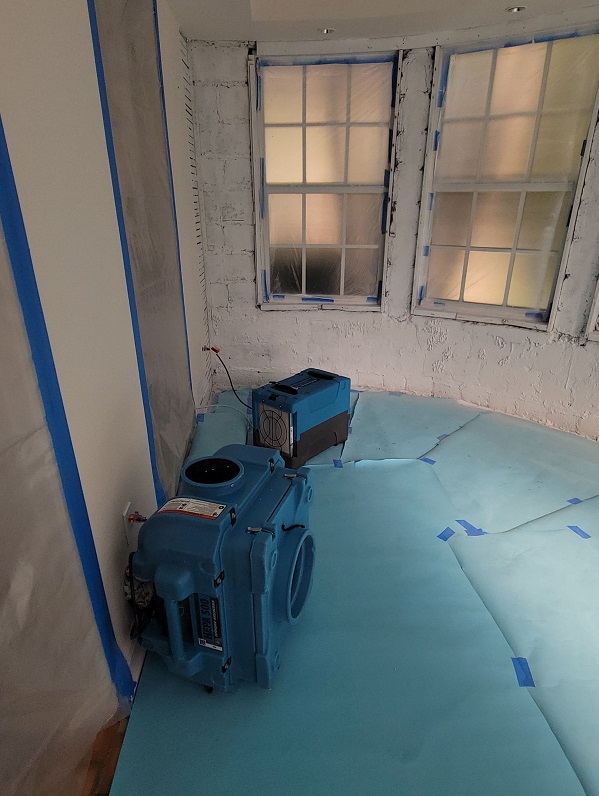
Air movers and commercial dehumidifiers run for several days, and the team checks readings daily until the materials reach normal moisture levels. In Hollywood’s climate, this is the step that stops hidden mold. It is also the step most often done too early or too lightly by general cleanup crews.
Step 4: Cleaning, sanitizing, and removing damaged materials
Floodwater is treated as contaminated. Wet carpet, padding, soaked insulation, and swollen drywall are usually removed. Surfaces that can be saved are cleaned and sanitized. Our flood damage restoration service covers this stage in detail.
Step 5: Mold check and repairs
If mold shows up, it needs containment and proper removal, not a spray bottle. After drying and cleaning, the team can handle rebuild work such as drywall, flooring, and paint. You can read more about our mold remediation work if moisture has been sitting for more than a day or two.
Not sure how bad the damage is? Call Rapid Response Restoration today and ask for a damage assessment. A quick call can tell you whether you need pumps and dryers or a simple cleanup.
What about roof damage and broken windows?
Water that came in from above needs a different first response. If your roof lost shingles, tiles, or flashing, rain will keep coming in with every shower until you cover the opening. Emergency tarping buys time while you wait for permanent repairs and for the adjuster to see the damage. Our roof tarping service is built for this exact situation.
Quick tip: Do not climb onto a wet roof yourself. Wet tile and shingles are slippery, and many storm injuries happen during DIY tarping attempts.
Should you call insurance or a restoration company first?
Call both the same day. Your insurance company will start a claim and tell you what they need. A restoration company will stop the damage from growing, which most policies expect you to do. Insurers generally require “reasonable steps” to prevent further loss, so waiting several days to start drying can create problems with your claim.
A few tips that help claims go smoothly:
Take photos and video before cleanup starts. Keep receipts for emergency repairs. Keep damaged items until the adjuster has seen them or approved disposal. Ask your restoration company for a written scope of work and moisture logs. Florida has deadlines for reporting a claim, so check your policy and report the loss as early as you can.
For a deeper look at coverage, read our post on whether homeowners insurance covers water damage in Florida.
Can you clean up storm flooding yourself?
You can handle a small, clean-water spill, such as a few cups from a window leak, with towels and a fan. Storm flooding is different. Floodwater is usually considered contaminated, and it soaks into places you cannot reach. DIY cleanup often looks finished while the subfloor and wall cavities stay wet. Two weeks later, the owner finds a musty smell, bubbling paint, or black spots near the baseboards.
Call a professional if any of these apply:
- Water reached outlets, appliances, or the electrical panel
- The water came from outside, a canal, or a sewer backup
- More than one room is wet
- The water sat for longer than a day
- You smell mustiness but cannot see the source
Wet areas hide mold, and our guide on how professional water damage restoration prevents mold growth explains why early drying matters so much.
How do you choose an emergency restoration company near you?
If you search “storm damage restoration near me” after a storm, you will see a long list, and many of those companies are stretched thin or based far away. A few things separate a reliable local team from the rest:
A good emergency restoration company answers at any hour, arrives quickly, and explains what it plans to do before it starts. A reliable team holds proper licensing and insurance, relies on moisture meters instead of guesswork, and documents the job with photos and drying logs your adjuster can use. Local knowledge matters too, including older homes, condo associations, and how Hollywood’s water table behaves after heavy rain.
It helps if the company can also handle the rebuild. Our general construction company team can move from drying to repairs, so you deal with one crew from start to finish.
Rapid Response Restoration serves Hollywood, the rest of Broward County, and Miami-Dade. If you are comparing options across the county line, our page on storm damage restoration Miami shows how we handle larger storm losses on the Miami side.
What is the difference between water damage and flood damage?
It comes down to the source. Water damage usually refers to leaks, burst pipes, and roof intrusion, where the water starts clean or mostly clean. Flood damage comes from outside sources like heavy rain, storm surge, or overflowing canals, and it is treated as contaminated water. That is why flood damage restoration involves stricter cleaning and removal than a plain pipe leak.
Many storms cause both. A roof leak soaks the ceiling while a flood in Hollywood pushes water through the front door. A professional team will treat each area according to its water type. If you are comparing services, our water damage restoration page lays out the process for clean and contaminated losses, and the same crew can cover both.
What are the Florida emergency resources worth saving?
Keep these bookmarked or written down before the next storm. They are free and useful:
Florida Division of Emergency Management at floridadisaster.org for statewide alerts, shelters, and recovery information. Broward County Emergency Management for local evacuation zones, road closures, and sandbag locations. FEMA at disasterassistance.gov if a federal disaster declaration is issued for your area. The 211 helpline for shelter, food, and cleanup assistance. Your insurance company’s claims line and policy number, saved in your phone.
These Florida emergency resources help with the bigger picture. A restoration company handles your property, and these agencies handle the wider recovery.
Do not wait for water stains to spread. Call Rapid Response Restoration now and get a crew headed to your Hollywood property for storm cleanup, drying, and repairs.
Quick answers to common questions
How soon should I call after a storm?
Right away. The first 24 hours decide how large the repair becomes.
Does Rapid Response Restoration work at night and on weekends?
Yes. Storms do not follow business hours, and our team handles 24-hour water damage calls every day.
Will my insurance pay for restoration?
Many policies cover sudden storm damage, but flood coverage often requires a separate flood policy. Check your policy and report the loss quickly.
How long does drying take?
Most homes need three to five days of controlled drying, though larger losses and thick materials can take longer.
Do I need to move out?
Not always. If the water was contaminated, the power is off, or mold is present, staying elsewhere for a few days is safer.
What should I search for if I need help fast?
Phrases like “water damage restoration Hollywood FL” or “water damage restoration Hollywood” bring up local companies, but call and ask about response time, licensing, and moisture documentation before you decide.
Final thoughts
A storm leaves a lot of decisions in a short window. Stay safe, take photos, stop more water from coming in, and get professionals involved early. The faster wet materials come out and drying starts, the smaller your repair bill and the lower your mold risk. If your home was hit, storm damage restoration Hollywood FL homeowners trust starts with a fast call and a clear plan.
Rapid Response Restoration handles the full process: water extraction, drying, cleanup, mold checks, and rebuild. If you would like a free look at your property, book a damage assessment through our contact page and our team will follow up with next steps.
